In what can only be described as a "happy coincidence", Crystal Beans: From Dungeon Explorer has a top-down perspective and a guy with a sword as one of its playable characters. Needless to say, I had to drop everything, clear my schedule, and give this a game a run through. Emphasis on the word "run" because what we have here is a very brisk adventure. I imagine this is partly because like other games in the Dungeon Explorer series, this was designed with coop play in mind. They wanted to make something where a trio of friends could reasonably get from beginning to end in a few hours.

Hm... That's odd. This somewhat obscure import-only entry is the first time I had ever finished a Dungeon Explorer game. I suppose I'll need a reasonable explanation as to why. Though yours truly has experience with the more well-known Turbografx-16 games, I don't recall finishing either of them. That's a damn shame, because they're pretty brilliant, even if their best qualities don't get a chance to shine in single-player. Like, just off the top of my head, the fact that the last player to exit an area determines where everyone goes is so cool. It prompts the party to reach an agreement, deepening bonds or whatever it is friends are supposed to do. I'm only good at making enemies, so details such as these are lost on me.
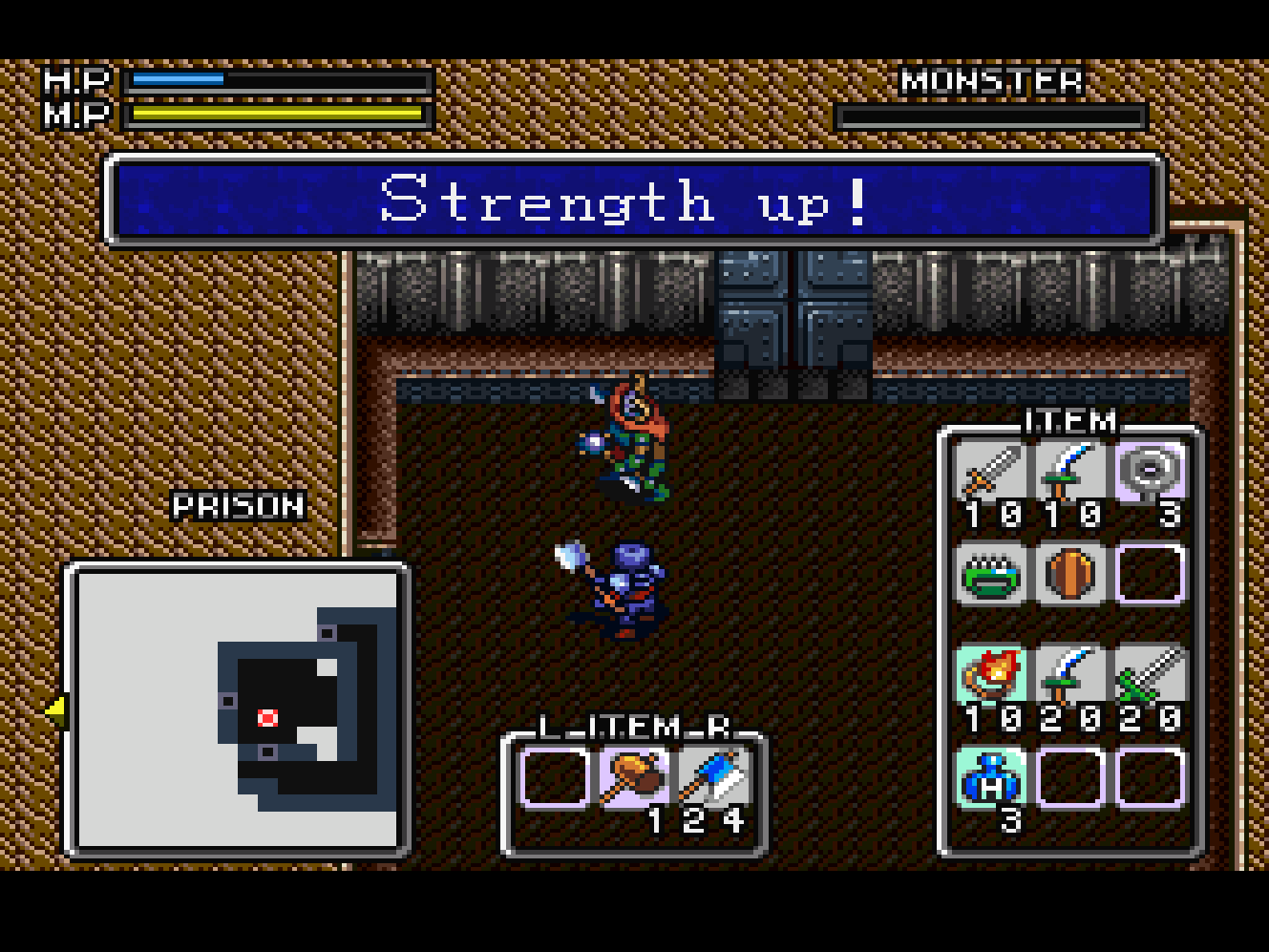
Going further, I believe what helps to set Crystal Beans apart is its format. Rather than attempt to link the world together in some cohesive manner, deciding where to go is determined almost entirely via a map screen. There are towns to visit, but they don't hold much besides people lamenting the current predicament. Expect to hear a lot of "Oh no! One of the 15 demons is residing in the nearby cave. Won't a hero of light save us?" from villagers. By the way, yes you are one of those heroes of light. There are several to choose from at the start of the game, with more unlocked if you're exceptionally thorough in your explorations. Anyway, the only other possible reason to poke around town is for a potential cache of items stashed away. Besides a couple power-ups that last for one life, much of what you'll find are healing potions and magic potions. One replenishes a portion of HP, the other destroys everything onscreen.
 |
| A building with no door holds several useful items. |
Anyway, the basic gist is that new areas unlock just as soon as you find the hint needed to advance and/or defeat the nearest boss. It's an easily digestible format where one doesn't have to worry about following directions or getting lost. I remember getting side-tracked very early on in Dungeon Explorer 2, and interest faded not long afterwards. That is not the case here. Everything has been streamlined to ensure the game is in an almost constant state of motion. This extends to dungeons, which are often linear and rarely consist of more than three floors. Even something like the obligatory "teleporter maze" might as well have been a straight line when compared to what I've dealt with in the past. Again, this was likely done to keep the cooperative process running smoothly, with an even greater emphasis on pick up & play aspects. To put it another way, Crystal Beans was designed so that if you tossed a random person a controller, they'd be able to figure out exactly what to do in a matter of seconds.
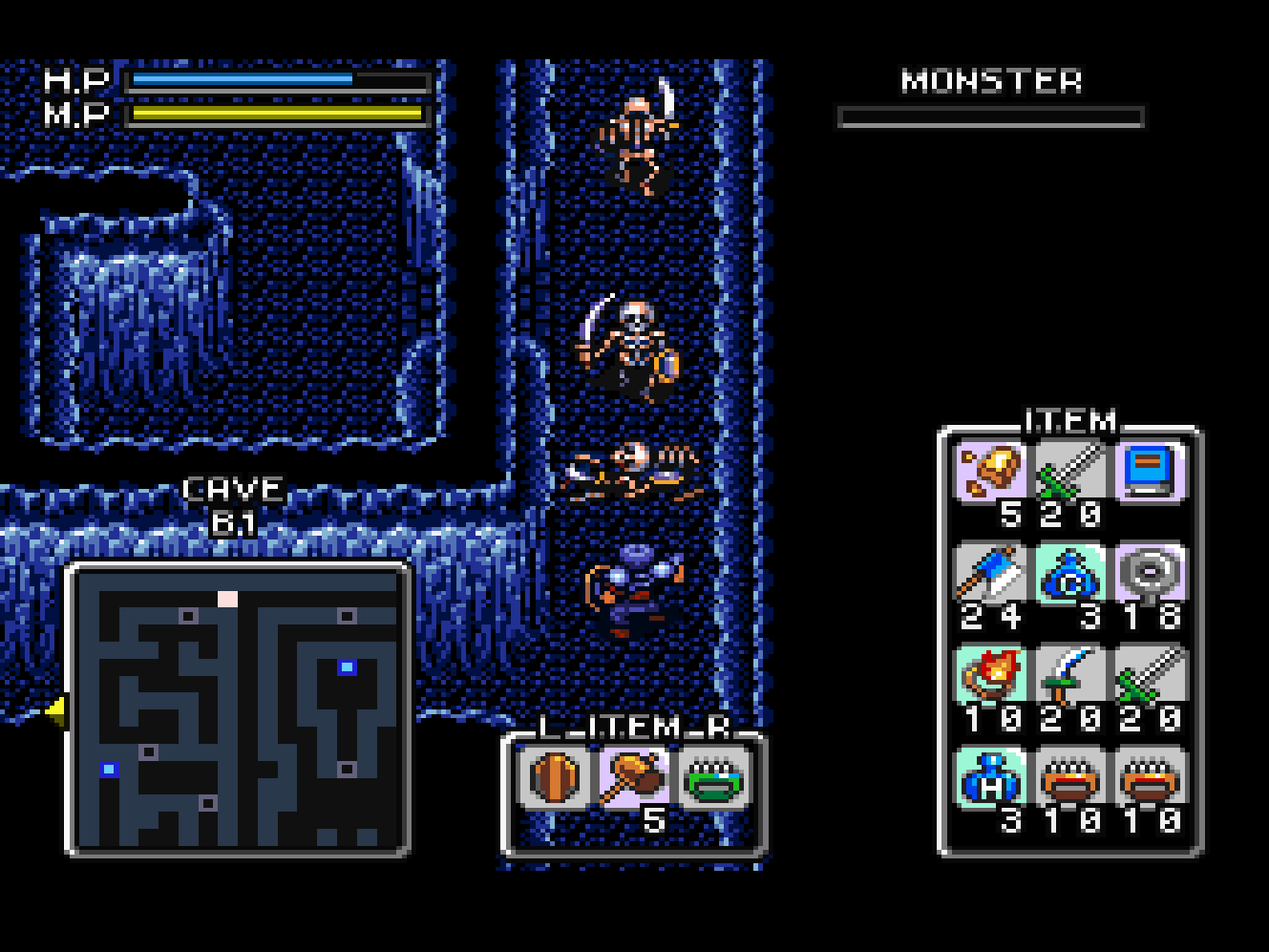
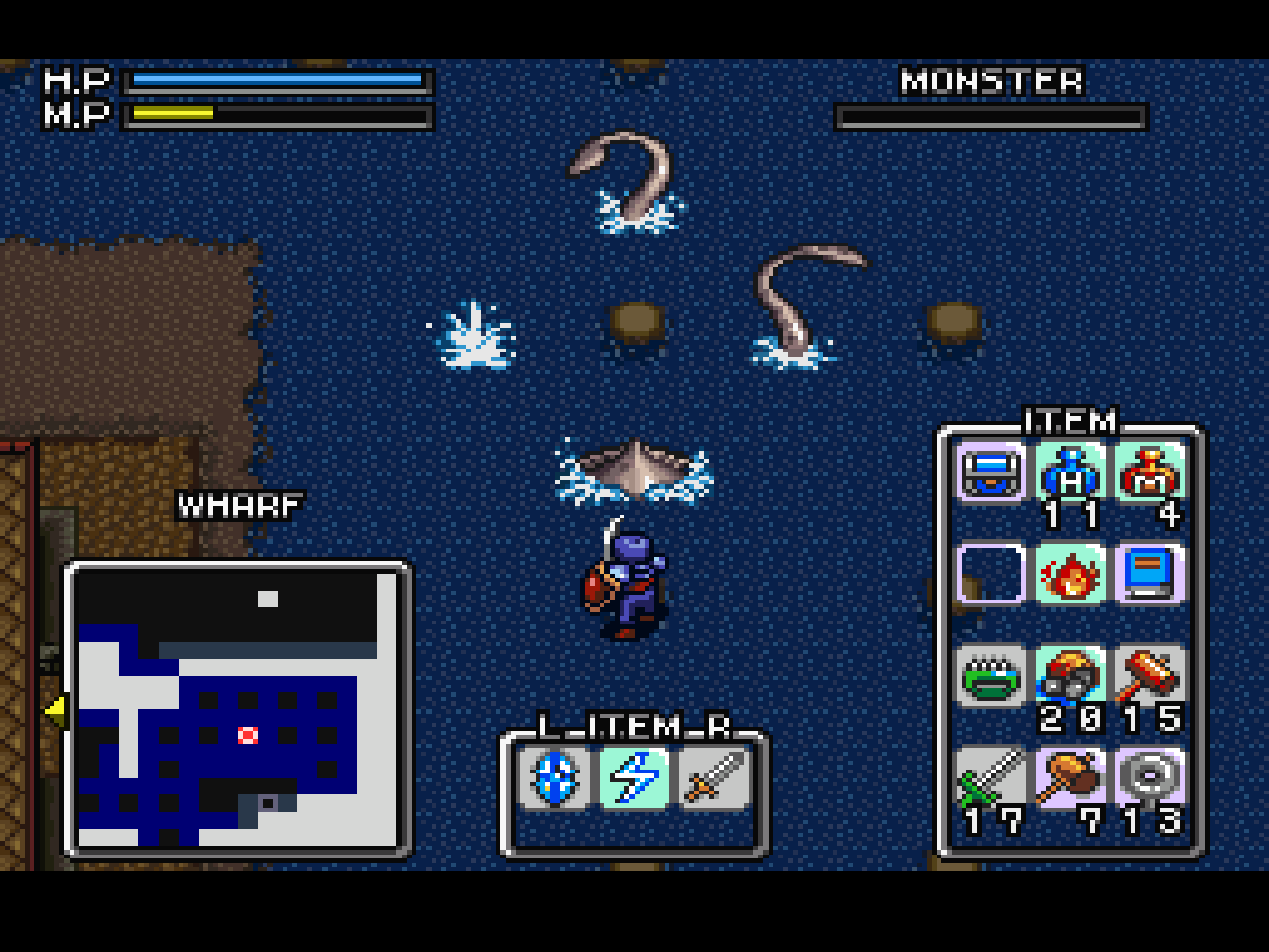
Since the bulk of hero's quest will be spent in dungeons, an explanation of what they're bound to find is necessary. The short answer is not much. The long answer is not much beyond obstacles and monster generators. Spike traps, fire-spewing statues, conveyor belts, and other means of harrying progress are dispersed throughout each floor. In most cases though, the damage they actually do is nominal. Monster generators are a bit more complicated, since they'll cough out adversity at a steady rate. The maximum number of monsters that can appear onscreen is only about a half dozen, so don't expect to get overwhelmed by massive crowds. However, they can do a lot of damage in a short time, so keeping them at a distance with your hero's projectile weapon is essential to survival.

If you caught the bit about "one life" earlier and don't know what the deal is with that, then here's a brief explanation. Upon starting the game or loading a save file, the chosen hero is given five lives. Again, this was done in service of difficulty balance. Depending on the situation, you could potentially get blindsided or cornered, losing both a life as well as all unspent consumables. Having multiple chances - with more tucked away here and there - keeps frustration from setting in. Take note of any areas where you find extra lives, especially if they can be obtained without a lot of exploration. All items respawn when a save is loaded, making it really easy to stock up for the battles ahead.
While I'm at it, the "15 demons" are the bosses of Crystal Beans. Each demon has a name and will usually taunt the hero before battle commences. Every fight is unique in the sense that there are a multitude of patterns and attacks to contend with. For example, the Minotaur has balls of steel, which roll around the screen and bounce off of the walls. Rather than attack directly, the Minotaur will pound the ground with a hammer, stunning you temporarily. Thus, the focus is not just to kill the boss, but to keep yourself in a position where the balls can't touch you, even when you can't move. Every fight has at least a little strategy to it, even if your somewhat large body makes it difficult to dodge everything. All the more reason to stock up on consumables & lives. I admit I won a few battles - particularly the finale - through attrition.

Defeated bosses drop gems, which are the sole means of leveling up. The color of the gem determines which statistic it'll raise. Seeing as how I was Jack the Fighter, there was no reason to sink levels into intellect. Agility helps to increase walking speed, but most levels were spent on strength and stamina. The final dungeons are filled with hard hitting enemies. Furthermore, the hero doesn't have anything in terms of invulnerability frames, so eating six projectiles in less than a second is a very real possibility. I didn't even attempt to create a specialty build like a "glass cannon" or whatever. That probably would've been better suited to another class instead of the generic "guy with sword" archetype anyway.
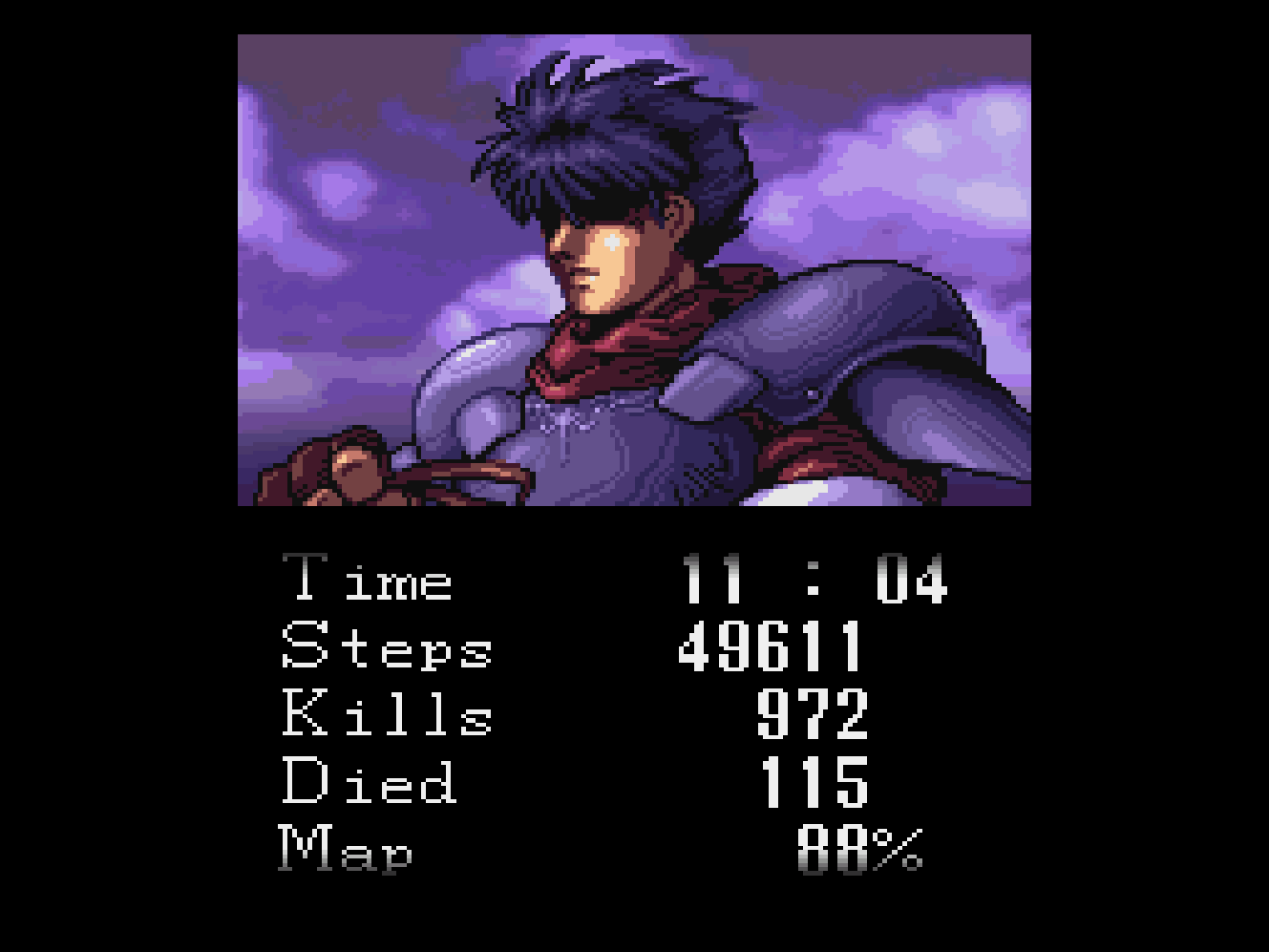
Still, I believe what matters is whether or not I had a good time with my play-through of Crystal Beans. I'll go ahead and say yes. It's a short game, which keeps those inklings of repetition and monotony from becoming apparent. The frequent cycling between dungeons and bosses absolutely works. Before I could even begin a list of complaints, the adventure had already ended. That's A+ pacing right there. Whether there's value in replaying the game is another story. While there are several characters to play as, their differentiating qualities are just stats and aesthetics. Having a couple of friends to team up with would certainly liven the experience, even on repeat play-throughs. However, convincing them to sit down with an Action RPG from 30 years ago sounds like a herculean task. Making friends in this modern-day nightmare is already damned impossible.
Oops! Before I forget. One fault that sticks like peanut butter on the roof of one's mouth is the Mirror "power-up". It causes projectiles to reflect off walls. Problem is, there's a two-projectile limit, and if they're both bouncing around doing nothing, then you're just out of luck. It's a serious nuisance during bosses. You lose it upon death, but that requires dying. Not exactly the most convenient workaround. Sorry game, but I have to complain about something!